Everyone Has Googled Something They Were Too Embarrassed to Ask Out Loud
The Search You Deleted
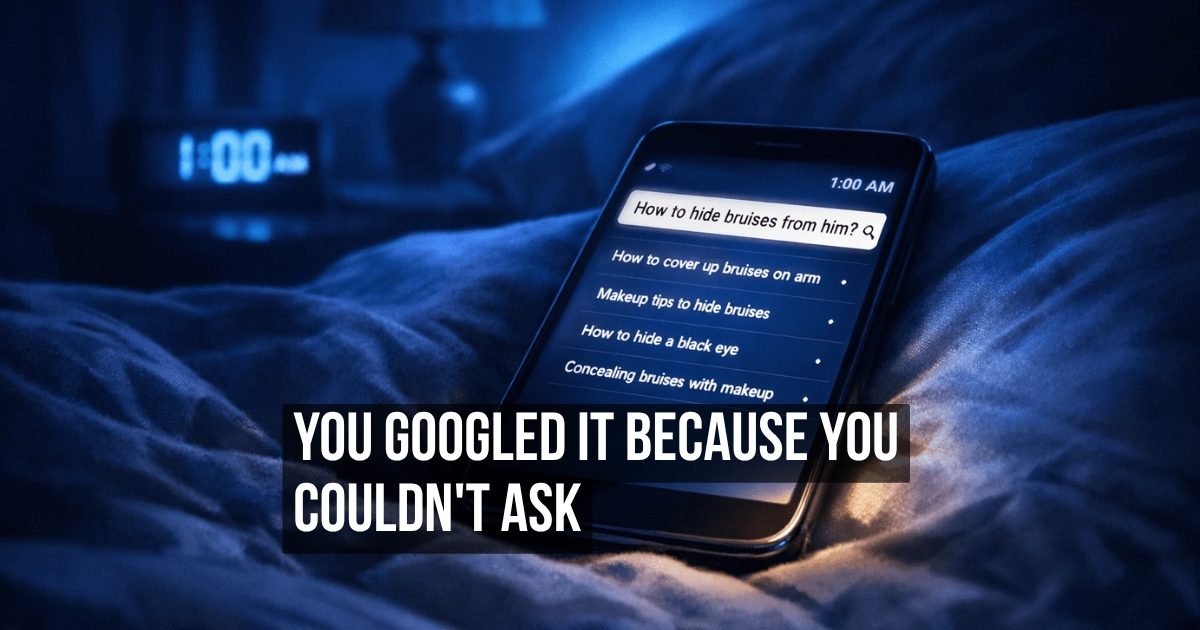
It was 1:23 AM. You typed a question into Google that you would not ask a doctor, a friend, or the person lying next to you. Something medical, maybe. Something about a bodily function, a feeling, a symptom, a word you encountered and did not understand but suspected you should. You got your answer in nine seconds. You closed the tab. You cleared the history. You told nobody.
You have done this hundreds of times. So has everyone you know. And the collective silence about it is one of the most interesting things about being alive right now.
The Privacy of Not Knowing
Before search engines, ignorance had social consequences. If you did not know something, your options were limited: ask someone and reveal the gap, visit a library and hope the indexing system cooperated, or live with not knowing. Each option carried a cost. Asking exposed you. Researching took hours. Not knowing felt permanent.
Google eliminated the cost but not the shame. You can now learn anything in private, at any hour, with no social witness. The gap in your knowledge is identified and closed before anyone notices it existed. But the impulse to hide the question remains — a residual embarrassment that predates the technology by centuries and has not been updated to match it.
You are not embarrassed by the answer. You are embarrassed by the fact that you needed to ask.
What People Actually Search For
Google’s autocomplete function offers a raw, unfiltered map of collective curiosity. Researcher Seth Stephens-Davidowitz, in his analysis of search data published in Everybody Lies, found that people’s private searches diverge dramatically from their public personas. In anonymous search bars, people ask about health anxieties they would never mention to a doctor, relationship concerns they would never voice to a partner, and basic knowledge gaps they would never admit in professional settings.
“How to boil an egg.” “What is a mortgage.” “Is it normal to feel…” “How to spell…” These are among the most common searches globally, and every single one would feel mildly humiliating to ask out loud in a room of peers. The search bar has become the world’s largest confessional — a space where the distance between what you know and what you pretend to know is quietly, privately closed.
The Performance of Competence
The embarrassment reveals something structural about how social life works. You are expected to know certain things by a certain age. How taxes function. What the electoral college is. Where a particular country sits on a map. Whether that mole is normal. The expectation is not explicit, but it is enforced by the slight change in someone’s expression when you admit to not knowing something they consider basic.
That expression is the reason Google exists as a private tool rather than a public one. Not because the information is sensitive, but because the act of needing it feels vulnerable. You do not search privately because the answer is secret. You search privately because the question is.
The Shared Secret
Here is the part that should be comforting but somehow is not. Everyone is doing this. Your doctor has Googled medical terms they forgot. Your lawyer has Googled legal definitions they should know. Your professor has searched for the year an event happened before walking into a lecture. The performance of knowing is universal, and behind it, the private research is equally universal.
Nobody knows everything they pretend to know. The search history you deleted is not proof of your ignorance. It is proof that you live in a world where admitting you do not know something still feels more dangerous than the not-knowing itself.
Something went wrong. Please refresh the page and/or try again.
Help us improve your journey
We use cookies to personalize your experience and understand how you use our site. By clicking 'Yes, I'm in!', you help us show you content you'll actually love. If you prefer to keep things simple, you can stick to the essentials. You can change your mind anytime!
Necessary
Always active
The technical storage or access is strictly necessary for the legitimate purpose of enabling the use of a specific service explicitly requested by the subscriber or user, or for the sole purpose of carrying out the transmission of a communication over an electronic communications network.
Preferences
The technical storage or access is necessary for the legitimate purpose of storing preferences that are not requested by the subscriber or user.
Analytics
The technical storage or access that is used exclusively for statistical purposes.The technical storage or access that is used exclusively for anonymous statistical purposes. Without a subpoena, voluntary compliance on the part of your Internet Service Provider, or additional records from a third party, information stored or retrieved for this purpose alone cannot usually be used to identify you.
Advertising
The technical storage or access is required to create user profiles to send advertising, or to track the user on a website or across several websites for similar marketing purposes.




Leave a Reply