The Surprisingly Revealing Psychology Behind the Apps You Download Once and Never Open Again
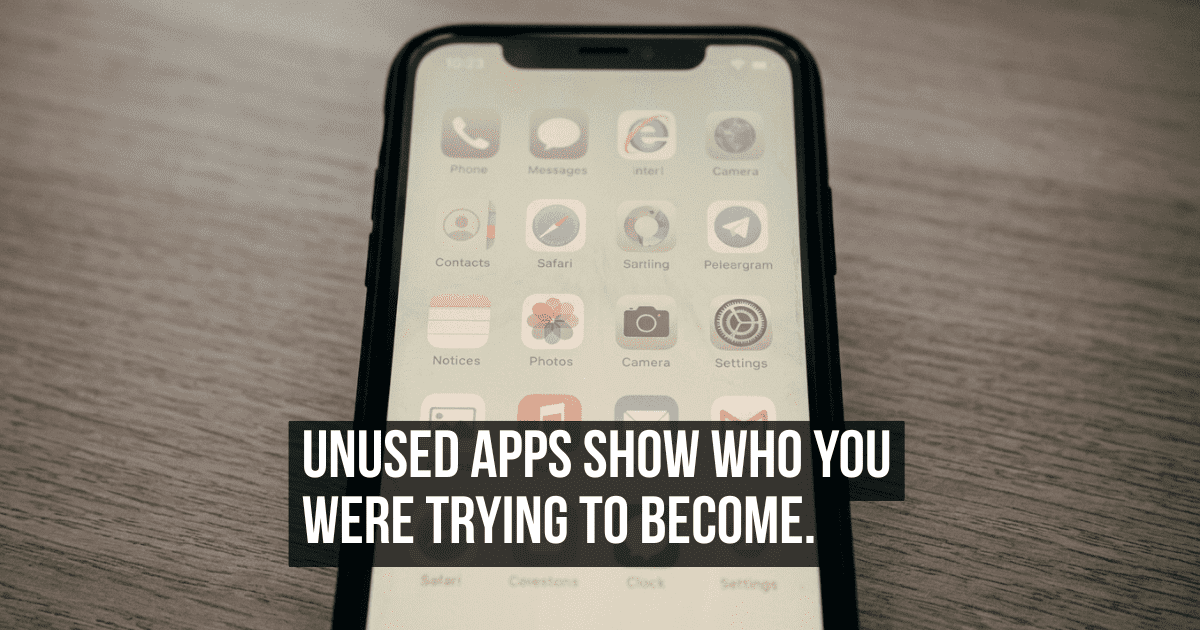
The average smartphone user has approximately 80 apps installed. They use about nine daily and around thirty monthly. The remaining fifty-odd — downloaded with intention, perhaps opened once or twice, now occupying space on a screen they’ve been moved past and organized around — represent something worth understanding. They are not failures of commitment or forgotten utilities. They are a behavioral archive of who you intended to be at a series of specific moments, and they have not been deleted because something about deleting them feels like admitting something.
The psychology of the abandoned app has not received the same research attention as the psychology of social media use or smartphone addiction, but it is arguably more revealing. The apps you actively use tell you how you spend your time. The apps you downloaded once and never opened again tell you something about the person you were trying to become — and what happened when the intention met the reality.
The Download as Commitment
The decision to download an app is a low-friction commitment. It takes seconds, costs nothing in most cases, and requires no public declaration. It is a private act of aspiration: the meditation app suggests a person who will meditate, the language-learning app a person who will learn the language, the budgeting app a person who will track their spending. The download is the statement of intent encoded in behavior, visible only to the device.
The commitment that follows — the actual use of the app, repeatedly, in the circumstances that make its function valuable — is considerably more demanding. It requires restructuring habit, making time, tolerating the initial friction of learning a new interface, and returning to the app on days when the original motivation has faded. Most apps lose 77 percent of their users within the first three days after download. Only approximately 32 percent of users remain active one month after installation. The gap between download and sustained use is where intention meets the friction of actual life, and friction wins most of the time.
What the App Portfolio Reveals
A careful examination of an average person’s app installation history produces something like a biographical map of aspirational projects and abandoned selves. The Duolingo install from eighteen months ago marks a holiday that made language-learning feel urgent. The fitness app from January marks the annual resolution that met February’s conditions. The sleep tracker marks a period of insomnia anxiety. The investment app marks the moment when financial self-improvement felt newly important. The podcast production app marks the idea for a podcast that never recorded an episode.
Each of these apps is a timestamp attached to a version of the person who downloaded it. Collectively, they form an inventory of the self-improvement projects that felt compelling in specific moments and then encountered the continuous demands of actual daily life.
The Deletion Reluctance
The app that has never been used but has not been deleted is a specific psychological phenomenon. Deleting it requires acknowledging that the intention behind the download has been abandoned — that the language is not being learned, the meditation is not happening, the budget is not being tracked. The app’s continued presence on the phone allows for the theoretical possibility that you might still do the thing, which is considerably more comfortable than the definitive acknowledgment that you will not.
This is the digital equivalent of the gym equipment in the spare room that has not been used in two years but also has not been sold: its presence sustains the identity of a person who exercises, even in the complete absence of any exercise. The object is doing psychological work as a symbol of an aspiration, regardless of whether the aspiration is being pursued.
The Industry That Benefits
The gap between download and use is not accidental from the industry’s perspective. The subscription model of many apps is specifically designed to benefit from users who pay but do not engage: the language learning subscription, the meditation app premium plan, the fitness app membership. The payment is processed regardless of whether the app is opened. The business model is, in a structural sense, sustained by people who pay for self-improvement and then do not pursue it — which is a commercially convenient version of the same aspiration gap that fills most people’s app libraries.
Something went wrong. Please refresh the page and/or try again.
Help us improve your journey
We use cookies to personalize your experience and understand how you use our site. By clicking 'Yes, I'm in!', you help us show you content you'll actually love. If you prefer to keep things simple, you can stick to the essentials. You can change your mind anytime!
Necessary
Always active
The technical storage or access is strictly necessary for the legitimate purpose of enabling the use of a specific service explicitly requested by the subscriber or user, or for the sole purpose of carrying out the transmission of a communication over an electronic communications network.
Preferences
The technical storage or access is necessary for the legitimate purpose of storing preferences that are not requested by the subscriber or user.
Analytics
The technical storage or access that is used exclusively for statistical purposes.The technical storage or access that is used exclusively for anonymous statistical purposes. Without a subpoena, voluntary compliance on the part of your Internet Service Provider, or additional records from a third party, information stored or retrieved for this purpose alone cannot usually be used to identify you.
Advertising
The technical storage or access is required to create user profiles to send advertising, or to track the user on a website or across several websites for similar marketing purposes.




Leave a Reply