The Fear Economy Keeps You Permanently Terrified of Unlikely Dangers and Sells You the Cure for Both
The safety-industrial complex profits from anxiety it actively creates.
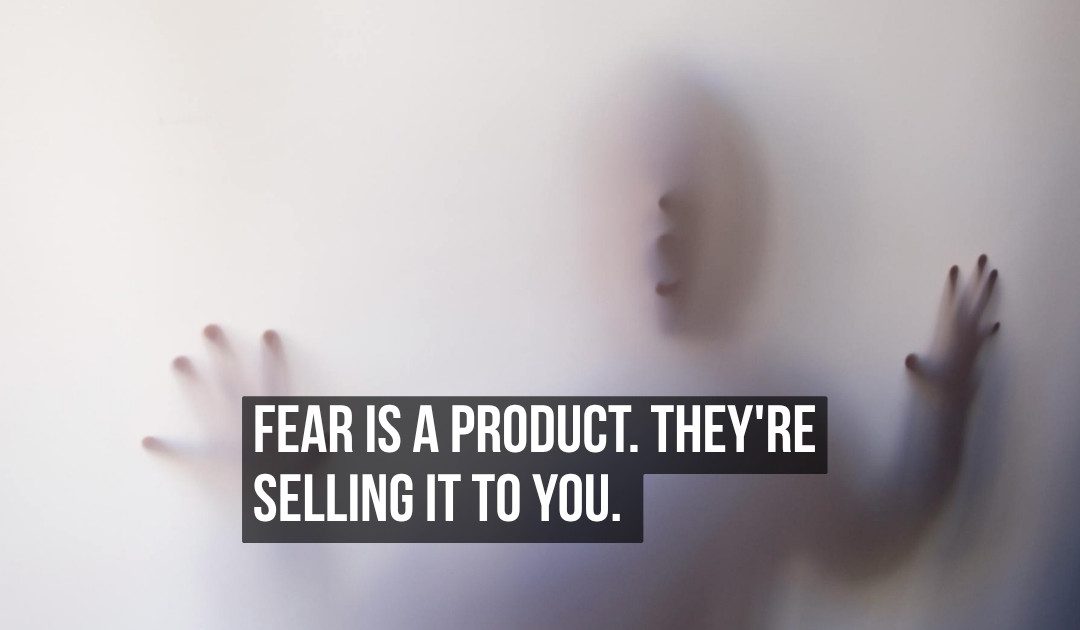
Fear has become infrastructure. Every app sends crisis alerts. Every product warns of dangers it can mitigate. Every platform surfaces worst-case scenarios. We’re surrounded by systems designed to keep us afraid—not safe, afraid—because fear is more profitable than safety ever was.
The mechanism is simple: create ambient anxiety about threats, then sell solutions to those threats. The solutions don’t eliminate danger; they provide temporary relief from the anxiety of danger, which means you keep purchasing them. Fear becomes subscription service, with safety sold monthly but never actually delivered.
The Alert Cascade
Notification systems exemplify this perfectly. Emergency alerts for weather events hundreds of miles away. Crime apps reporting incidents in neighborhoods you never visit. News alerts about threats that won’t affect you. Each notification creates micro-dose of fear that keeps you engaged with the platform.
The stated purpose is safety—you need to know about potential dangers. The actual function is attention capture. Frightened people pay more attention. Anxious people check more frequently. The fear keeps you returning to the app, which serves more ads, which generates more revenue.
This creates incentive misalignment. Platforms profit from keeping you afraid, not from making you safe. If you felt genuinely safe, you’d check less often. The business model requires sustained anxiety, which means surfacing threats continually even when threat level hasn’t changed.
The Product Fear
Consumer products have also embraced fear as marketing strategy. Home security systems advertise break-in statistics. Insurance companies highlight catastrophic scenarios. Health products emphasize dangers of not using them. The pattern is consistent: cultivate fear, position product as solution.
What’s rarely examined is whether the fear is proportional to actual risk. Most people face minimal risk of home invasion, but security companies profit from everyone believing they’re at high risk. Rare diseases get awareness campaigns that amplify fear beyond statistical likelihood. The goal isn’t accurate risk assessment—it’s heightened fear that drives purchasing.
This creates a strange relationship with danger where people are terrified of statistically unlikely events while ignoring actual common risks. The fear economy doesn’t care about actual safety; it cares about monetizable anxiety.
The Parenting Panic
Nowhere is fear cultivation more visible than parenting culture. Parents are bombarded with warnings about dangers that previous generations never worried about. Every product is potential hazard. Every decision carries catastrophic risk. The message is clear: without constant vigilance and premium products, your child is in danger.
This anxiety drives massive consumer spending on safety products, most of which address infinitesimal risks. The baby monitor with medical-grade sensors. The organic everything. The elaborate car seat. The developmental tracking apps. Each purchase provides brief relief from cultivated fear, which immediately gets replaced by new fear requiring new purchases.
The actual data shows children are safer than ever by most objective measures. But parental anxiety is higher than ever, because the fear economy has successfully convinced parents that safety requires constant spending and monitoring.
The Attention Economy Intersection
Fear also drives engagement on social media, which profits from sustained attention. Outrage content, threat content, crisis content—all generate more engagement than positive content. Platforms optimize for fear because fear keeps eyes on screens.
This creates feedback loops where frightening content gets amplified algorithmically, reaching more people, generating more fear, which drives more engagement with fear content. The system self-reinforces, creating ambient anxiety that platforms then monetize through advertising.
Users often don’t realize they’re being kept afraid intentionally. They experience the fear as response to real threats, not as manufactured emotional state designed to maximize platform value. The manipulation is invisible precisely because the content points to real dangers, just wildly disproportionate to actual risk.
The Political Weaponization
Fear has also become primary tool of political messaging. Both sides cultivate terror of the other. Election consequences are always existential. Policy disagreements become civilization-ending threats. The apocalyptic framing drives engagement, donations, and turnout.
The problem is that sustained fear is cognitively and emotionally exhausting. People living in constant state of threat perception make worse decisions, trust less, cooperate less effectively. The fear may drive short-term political engagement, but it corrodes long-term social cohesion.
The Actual Safety Question
What’s lost in fear economy is honest conversation about actual risks and reasonable precautions. Some fears are rational responses to real dangers. But most cultivated fear is disproportionate to actual risk, designed to drive behavior that profits others.
The alternative isn’t fearlessness—it’s calibrated concern based on actual probabilities rather than emotionally manipulative messaging. This requires actively resisting systems designed to keep you afraid, which is difficult when those systems constitute your information environment.
We’ve built an economy that profits from keeping you scared. The product isn’t safety—it’s temporary relief from manufactured anxiety, sold monthly, always requiring renewal, never actually resolving the fear it claims to address.
Something went wrong. Please refresh the page and/or try again.
Help us improve your journey
We use cookies to personalize your experience and understand how you use our site. By clicking 'Yes, I'm in!', you help us show you content you'll actually love. If you prefer to keep things simple, you can stick to the essentials. You can change your mind anytime!
Necessary
Always active
The technical storage or access is strictly necessary for the legitimate purpose of enabling the use of a specific service explicitly requested by the subscriber or user, or for the sole purpose of carrying out the transmission of a communication over an electronic communications network.
Preferences
The technical storage or access is necessary for the legitimate purpose of storing preferences that are not requested by the subscriber or user.
Analytics
The technical storage or access that is used exclusively for statistical purposes.The technical storage or access that is used exclusively for anonymous statistical purposes. Without a subpoena, voluntary compliance on the part of your Internet Service Provider, or additional records from a third party, information stored or retrieved for this purpose alone cannot usually be used to identify you.
Advertising
The technical storage or access is required to create user profiles to send advertising, or to track the user on a website or across several websites for similar marketing purposes.




Leave a Reply