Why Every New Building in Every Major City Now Looks Exactly the Same and Nobody Planned It That Way
From Tokyo to Toronto, contemporary architecture has converged on identical aesthetic—and nobody can quite explain why.
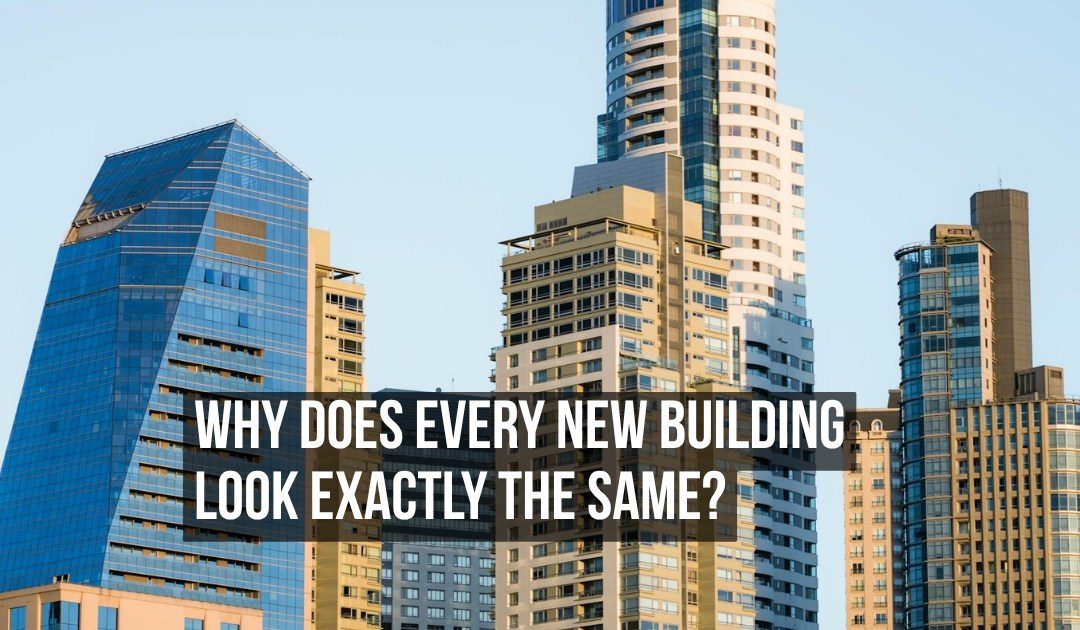
Drive through any major city and you’ll notice something strange: the new buildings all look identical. Not similar—identical. The same glass and steel facades, the same geometric minimalism, the same materials, the same proportions. A luxury apartment building in Dubai is visually indistinguishable from one in Seattle, London, or Singapore.
This global architectural homogenization happened remarkably fast. Thirty years ago, cities had distinctive architectural identities. Now they don’t. The convergence is so complete that photos of contemporary urban districts could be from almost anywhere. Something caused this aesthetic collapse, and the explanations are more complex than simple globalization. The same forces that turned museums into Instagram content farms are at work here—spaces designed not for the people who use them, but for the images they produce.
The Material Convergence
Part of the answer is material technology. Modern glass production, steel fabrication, and concrete systems are globally standardized. These materials have specific structural properties that constrain design possibilities. Buildings using the same materials in the same ways naturally look similar.
But this doesn’t fully explain the aesthetic convergence. The materials permit enormous design variation that isn’t happening. Steel and glass can create vastly different aesthetics—compare 1960s modernism to contemporary construction using identical materials. The material standardization enables but doesn’t require aesthetic uniformity.
Something beyond material constraints is driving the convergence. Architects working with same materials used to produce diverse results. Now they don’t, suggesting the limitation is cultural rather than technical.
The Software Standardization
Contemporary architecture also relies heavily on computer-aided design software. The major platforms—Revit, AutoCAD, SketchUp—come with built-in assumptions about how buildings should be designed. Default settings, template systems, rendering capabilities—all subtly push designs toward certain aesthetics.
When everyone uses the same software with the same defaults, designs converge. The software becomes invisible constraint on imagination. What’s designable within the software’s paradigm gets built. What requires working against the software doesn’t.
This creates feedback loop. Software companies study what gets built, update their tools to better support those designs, which further entrenches the aesthetic. The convergence becomes self-reinforcing through digital tools.
The Economic Pressure
The financial logic of contemporary development also demands aesthetic standardization. Luxury real estate is global investment product. Wealthy buyers in one city make investment decisions about properties in other cities based on comparable aesthetics.
This requires buildings to look like “luxury” in standardized way. The glass tower aesthetic signals wealth, modernity, and investment value across cultures. Deviating from this aesthetic risks property not being recognized as luxury commodity by international investors.
The economics reward sameness. The distinctive building might be architecturally interesting but harder to value, finance, and sell to global investment class. Standardized aesthetic is standardized financial product. This is related to why Alcatraz became a tourist trap—when places are optimized for transaction rather than experience, authenticity drains out.
The Regulatory Convergence
Building codes have also converged globally. Energy efficiency standards, safety requirements, accessibility regulations—these are increasingly similar across countries. Complying with similar regulations pushes designs toward similar solutions.
The regulations don’t explicitly mandate aesthetic uniformity, but they constrain possibilities in ways that produce it. Certain window configurations, building envelopes, structural systems become standard because they reliably meet codes across jurisdictions.
Architects designing for global market naturally use solutions known to work everywhere rather than developing location-specific approaches that might face regulatory challenges. The path of least resistance leads to sameness.
The Education System
Architectural education has also globalized. The major schools teach similar design philosophies, celebrate similar exemplars, train students in similar software. Graduate architects worldwide emerge with shared aesthetic values and technical approaches.
This educational standardization is reinforced by international architecture competitions, publications, and awards that celebrate similar work. Young architects learn what “good” architecture looks like through globally distributed examples that look increasingly alike.
The star system in architecture also drives convergence. A few famous architects design globally, their aesthetic spreading through projects on multiple continents and through imitators copying their successful formula. This is the same dynamic as art schools that produce graphic designers—systems that claim to teach creativity but actually enforce conformity.
The Cultural Neutrality
The global aesthetic might also be specifically designed to be culturally neutral—to not look like it belongs to any particular place or tradition. This neutrality makes buildings internationally legible, avoiding cultural specificity that might alienate foreign investors or seem parochial.
But cultural neutrality is itself cultural aesthetic—specifically Western, modernist, corporate. It presents itself as universal while actually being particular aesthetic exported globally through economic power.
The “neutral” building actually erases local architectural traditions, climate adaptations, and material cultures in favor of standardized global aesthetic that serves financial liquidity rather than cultural expression or environmental appropriateness.
The Climate Disconnect
Particularly strange is that identical aesthetic appears in radically different climates. The glass tower works poorly in Dubai heat and Toronto cold, yet both build them. The environmental inappropriateness is sacrificed for aesthetic standardization that signals global luxury.
This suggests aesthetic has become detached from environmental function. Buildings look the way investment products should look, not the way climate-appropriate shelter should look. The convergence reflects financial logic overwhelming environmental rationality.
The Missing Diversity
What remains puzzling is why market forces that usually produce differentiation have instead produced uniformity. Usually competition drives aesthetic diversity as architects and developers seek distinction. But in global architecture, competition has driven convergence.
The answer might be that contemporary architecture serves different market than historical architecture. It’s not competing for local residents or users—it’s competing for international investment capital. And capital wants standardized products that are easily valued and traded, not distinctive buildings that require local knowledge to appreciate.
The identical buildings everywhere represent triumph of financial logic over cultural expression, of global investment markets over local context, of algorithmic standardization over human variation. And the convergence continues accelerating, suggesting something fundamental has changed about why we build and who we build for.
Something went wrong. Please refresh the page and/or try again.
Help us improve your journey
We use cookies to personalize your experience and understand how you use our site. By clicking 'Yes, I'm in!', you help us show you content you'll actually love. If you prefer to keep things simple, you can stick to the essentials. You can change your mind anytime!
Necessary
Always active
The technical storage or access is strictly necessary for the legitimate purpose of enabling the use of a specific service explicitly requested by the subscriber or user, or for the sole purpose of carrying out the transmission of a communication over an electronic communications network.
Preferences
The technical storage or access is necessary for the legitimate purpose of storing preferences that are not requested by the subscriber or user.
Analytics
The technical storage or access that is used exclusively for statistical purposes.The technical storage or access that is used exclusively for anonymous statistical purposes. Without a subpoena, voluntary compliance on the part of your Internet Service Provider, or additional records from a third party, information stored or retrieved for this purpose alone cannot usually be used to identify you.
Advertising
The technical storage or access is required to create user profiles to send advertising, or to track the user on a website or across several websites for similar marketing purposes.




Leave a Reply