Recycling Is a Corporate Lie Designed to Transfer the Moral Burden of Plastic Waste Onto Individual Consumers
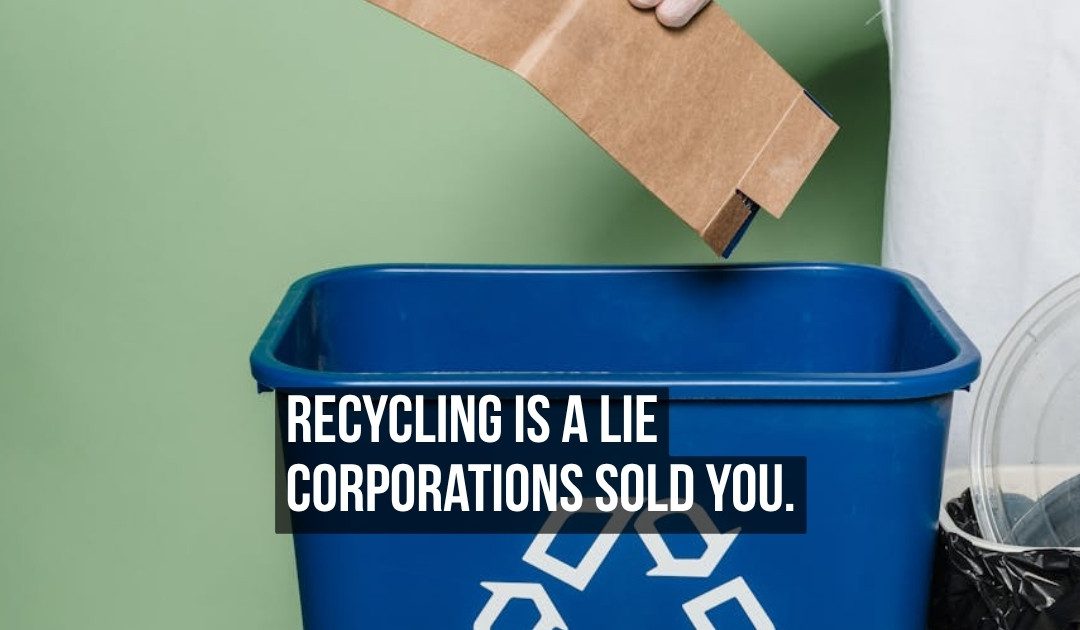
The blue bin in your kitchen exists so Coca-Cola doesn’t have to change anything.
Recycling has achieved something remarkable: it convinced entire populations that individual waste sorting is environmental action while allowing corporations to produce unlimited disposable packaging without consequence. You diligently separate your plastics, rinse your containers, follow the arrows—and the vast majority ends up in landfills or incinerators anyway. The system was designed to fail, and you were designed to not notice.
The recycling myth serves specific function: it transfers responsibility for waste from producers to consumers. Corporations generate billions of tons of single-use packaging, but somehow your failure to sort correctly becomes the environmental problem. The system blames you for the trash they chose to create. The same mechanism is documented in big oil invented the carbon footprint—personal responsibility framing was literally engineered by fossil fuel companies to redirect attention from systemic change.
The Contamination Theater
Recycling programs emphasize proper sorting, as if contamination is why the system fails. Don’t mix paper with plastic. Rinse everything. Remove caps. Follow complex rules that vary by municipality. The implication is that recycling works—you’re just doing it wrong.
This is misdirection. The real problems are economic and systemic. Most plastic isn’t economically recyclable. Markets for recycled materials are volatile and often nonexistent. Facilities lack capacity or technology to process what you sort. But focusing on your sorting mistakes obscures these structural failures.
The contamination concern also provides excuse for sending your carefully sorted recyclables to landfill. They claim your bin was contaminated, so nothing could be processed. You failed the system, not the system failing you. This places responsibility on individuals for outcomes they can’t control.
The Plastic Fraud
The plastic recycling symbol is perhaps history’s most successful greenwashing. Those arrows on plastic containers suggest recyclability, when in reality only types 1 and 2 have any real recycling infrastructure, and even that’s minimal. Types 3-7 are essentially unrecyclable, but the symbol implies otherwise.
This deception is intentional. Plastic manufacturers promoted recycling symbols knowing most plastic wouldn’t be recycled. The goal was preventing regulation by suggesting the problem was solved through consumer recycling when actually no solution existed.
Current recycling rates expose the fraud: roughly 9% of plastic ever produced has been recycled. The rest is in landfills, oceans, or burned. Yet recycling programs continue as if they’re meaningful environmental action rather than waste management theater that maintains profitable production of disposable products. For the full picture of how this connects to the broader energy industry’s playbook, see electric cars won’t save the planet—the same structural problems that make recycling a lie make individual green consumption choices mostly performative.
The Export Scheme
For decades, wealthy nations “recycled” by shipping waste to developing countries. Your sorted recyclables went to facilities in Asia where they were dumped, burned, or improperly processed, creating environmental catastrophe elsewhere while letting wealthy nations claim high recycling rates.
China’s 2018 ban on waste imports exposed this system’s fraud. Suddenly, municipalities had nowhere to send materials they claimed to recycle. The waste piled up, revealing that “recycling” often meant “shipping to China.” The entire system depended on outsourcing environmental harm to places you couldn’t see.
Even now, waste continues flowing to countries with minimal environmental regulations. Your recycling might get processed, or it might be dumped in Indonesian rivers. The opacity is feature, not bug—if you can’t see where it goes, you can believe it’s being recycled.
The Individual Responsibility Trap
The recycling narrative’s greatest achievement is making waste feel like personal responsibility problem. You produce trash, so you must manage it properly. The corporations generating that trash—designing products for single use, wrapping everything in plastic, eliminating reusable options—escape scrutiny.
This individualization prevents systemic solutions. If waste is personal problem, the answer is personal action: recycle better, consume less, make better choices. Not: regulate corporations to eliminate unnecessary packaging, mandate producer responsibility for waste, invest in actual circular economy infrastructure.
The focus on individual recycling also suggests problem is manageable through consumer behavior when actually it requires complete transformation of production systems. You cannot recycle your way out of crisis caused by designed disposability of everything. This guilt-transfer dynamic is examined directly in your recycling bin is corporate guilt transfer.
The Missing Solution
Real solutions to waste crisis involve producer responsibility: corporations that create packaging must manage its entire lifecycle, including disposal. This creates incentive to design for durability, reusability, and actual recyclability. When waste costs producers, they produce less waste.
But recycling theater prevents these solutions by suggesting problem is already being addressed through consumer action. Why regulate corporations when citizens are already recycling? The blue bin becomes shield protecting producers from accountability.
The truth is most packaging shouldn’t exist. We don’t need individually wrapped everything, disposable versions of durable goods, planned obsolescence as business model. These are choices corporations made because disposal costs were externalized to you and the environment.
The Complicity
Recycling programs also make you complicit in the system. You participate in waste management, which makes you invested in believing it works. Admitting recycling is largely theater means admitting you’ve been sorting trash for nothing, which is uncomfortable. Easier to keep believing the system functions.
This psychological investment keeps the fraud running. Citizens defend recycling programs because acknowledging failure means their effort was wasted. Municipalities maintain programs because eliminating them would admit they never worked. Corporations profit from everyone else’s investment in the myth.
Recycling isn’t environmental action—it’s performance that allows continued production of products designed to become trash. The blue bin exists so corporations can keep generating waste while you feel responsible for managing it. And until we recognize this, nothing will change except the volume of trash pretending to be recycled.
Something went wrong. Please refresh the page and/or try again.
Help us improve your journey
We use cookies to personalize your experience and understand how you use our site. By clicking 'Yes, I'm in!', you help us show you content you'll actually love. If you prefer to keep things simple, you can stick to the essentials. You can change your mind anytime!
Necessary
Always active
The technical storage or access is strictly necessary for the legitimate purpose of enabling the use of a specific service explicitly requested by the subscriber or user, or for the sole purpose of carrying out the transmission of a communication over an electronic communications network.
Preferences
The technical storage or access is necessary for the legitimate purpose of storing preferences that are not requested by the subscriber or user.
Analytics
The technical storage or access that is used exclusively for statistical purposes.The technical storage or access that is used exclusively for anonymous statistical purposes. Without a subpoena, voluntary compliance on the part of your Internet Service Provider, or additional records from a third party, information stored or retrieved for this purpose alone cannot usually be used to identify you.
Advertising
The technical storage or access is required to create user profiles to send advertising, or to track the user on a website or across several websites for similar marketing purposes.




Leave a Reply