Everyone Hates Small Talk But It Is the Most Sophisticated Social Technology That Human Beings Have Ever Developed
What you dismiss as “meaningless chit-chat” is actually complex psychological technology most people can’t master.
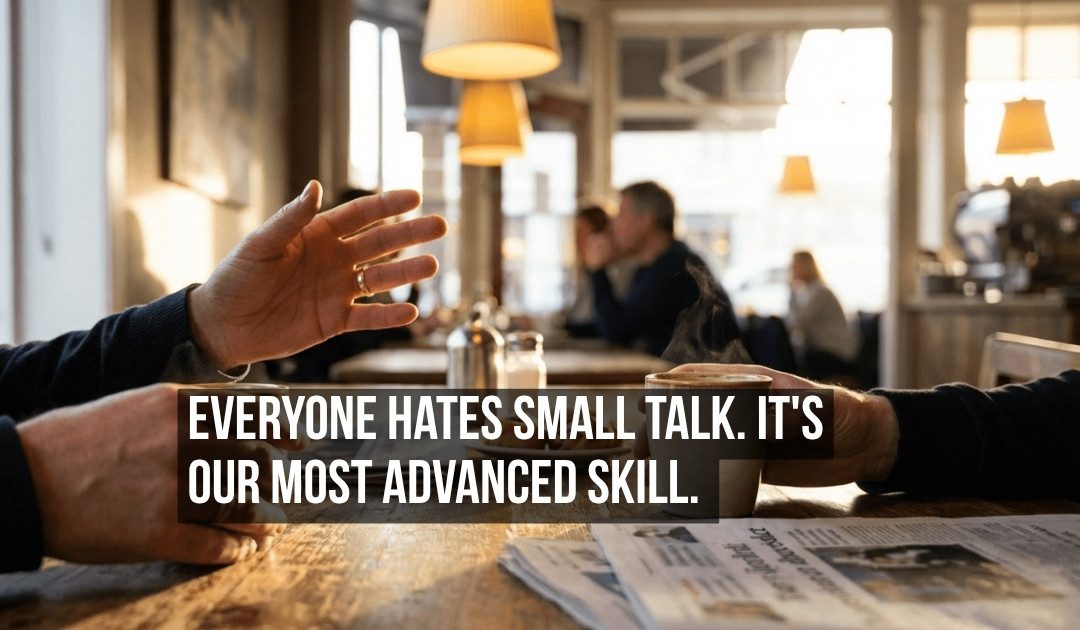
Small talk is universally derided as shallow, awkward, waste of time. People pride themselves on hating it, on preferring “real” conversations, on getting straight to the point. The ability to skip small talk and discuss important topics immediately is positioned as sign of depth and authenticity.
But small talk isn’t failed attempt at meaningful conversation. It’s highly sophisticated social technology serving multiple functions that “real” conversation can’t. The contempt for small talk often comes from not understanding what it’s actually doing—which is far more complex than exchanging weather observations. The very pattern small talk is accused of avoiding—real listening—is explored in nobody is listening anymore, which documents what happens when we collectively devalue the conversational foundation that small talk builds.
The Calibration Function
Small talk is social calibration—testing conversational norms, energy levels, boundaries before committing to deeper interaction. Those seemingly pointless exchanges about weekend plans or local events are actually data gathering about how the other person communicates, what topics they’re comfortable with, what their current emotional state is.
This calibration is essential. Jumping straight into “deep” conversation without calibration often results in mismatch—one person wants philosophical discussion while the other wanted brief pleasant interaction. Small talk establishes what kind of conversation is possible right now with this specific person.
The calibration also serves self-protection. You’re testing whether someone is safe to engage with more deeply before revealing vulnerability. The person who bypasses small talk and immediately gets personal isn’t being authentic—they’re being socially reckless, demanding intimacy before establishing it’s welcome.
The Ritual Function
Small talk also functions as ritual maintaining social fabric. Those brief exchanges with neighbors, colleagues, acquaintances—they’re not information exchange. They’re mutual acknowledgment of social connection. The content is irrelevant; the performance of connection is the point.
Societies with robust small talk cultures often have stronger social cohesion precisely because these micro-interactions continuously reinforce relational bonds. The brief conversation with cashier, the weather comment to stranger, the how-was-your-weekend with coworker—these create sense of living among people you’re connected to, even minimally.
Cultures or individuals who reject small talk as meaningless often report greater loneliness and social isolation. This isn’t coincidental. The “meaningless” conversations were doing meaningful work maintaining sense of social belonging. The broader social consequences of this rejection are documented in loneliness epidemic—a crisis driven in part by the systematic withdrawal from exactly the low-stakes connection small talk provides.
The Cognitive Rest
Small talk also provides cognitive rest in ways deeper conversation doesn’t. Meaningful discussion requires mental effort—tracking complex ideas, forming arguments, emotional processing. Small talk requires minimal cognitive load, allowing conversation without exhaustion.
This rest function is particularly important for people with limited social energy. The socially anxious, introverts, neurodivergent people—many find extended meaningful conversation depleting in ways small talk isn’t. Dismissing small talk as inferior eliminates accessible form of social connection for those who can’t sustain constant depth.
The rest also applies temporally. You can’t have meaningful conversations continuously without exhaustion. Small talk provides conversational activity during periods when you need social contact but not intensity. It’s not failed depth—it’s appropriately calibrated shallowness.
The Skill Development
Small talk also develops conversational skills in low-stakes environment. Learning to read social cues, manage awkward pauses, find common ground, maintain appropriate boundaries—these skills are practiced through small talk before being deployed in higher-stakes interactions.
People who pride themselves on skipping small talk often lack these skills, which they interpret as disliking socializing when actually they’re just unpracticed. The “meaningless” conversations they avoided were training ground for meaningful ones.
This is particularly visible in professional contexts. The ability to small talk effectively—making clients comfortable, networking at events, building rapport with colleagues—is career advantage precisely because it demonstrates sophisticated social ability, not absence of substance. For how this relates to kindness and social performance, see kindness has become emotional labor.
The Accessibility
Small talk is also democratically accessible in ways deep conversation isn’t. Meaningful discussion often requires shared knowledge, similar education, common interests. Small talk requires almost nothing—just willingness to briefly acknowledge shared reality.
This makes small talk more inclusive. The contempt for it often correlates with privilege—people who can easily find others for “real” conversation don’t value the accessible connection small talk provides. But for those with language barriers, different educational backgrounds, or limited social opportunities, small talk might be primary form of social connection available.
The Present Moment
Small talk also anchors conversation in shared present rather than abstract ideas or personal history. Discussing the weather isn’t meaningless—it’s acknowledging shared environmental experience. Commenting on local events creates common ground in immediate reality.
This present-focus is valuable. Not all conversation should be abstract or personal. Sometimes the point is simply being together in the moment, acknowledging shared experience of being alive right now in this place. Small talk accomplishes this without demanding more.
The Misunderstood Depth
The deepest misunderstanding is that small talk is shallow because it avoids important topics. But small talk often contains significant information encoded in how it’s performed, not what’s said. Tone, timing, willingness to engage, how questions are answered—these reveal personality, mood, relationship status more honestly than direct discussion often does.
Skilled practitioners of small talk read these subtexts fluently. They’re not missing depth—they’re finding it in different registers than explicit content. The person who thinks small talk is meaningless often hasn’t learned to read what it’s actually communicating.
Small talk isn’t failed attempt at real conversation. It’s different technology for different purposes—calibration, ritual, rest, training, accessibility, presence. Dismissing it as shallow reveals misunderstanding of what conversation is for. Sometimes the point isn’t depth—it’s connection, and small talk creates that more reliably than forced profundity.



Leave a Reply